Quantum technologies continue to attract attention and investment, but progress remains difficult to translate into real-world impact. As hardware development advances incrementally, attention is shifting towards software, integration, and orchestration, areas where AI can be used to manage complexity, reduce friction, and make quantum systems usable in practice.
Michael Lewis
Professor of operations management in the Business School at the University of Bristol
It is important to stress the non-commutative relationship between quantum and AI. Quantum for AI, tied to medium term hardware developments is prone to hype. Discussions that jump too quickly from processor milestones to pharmaceutical, logistics, finance, defence, infrastructure transformation. But the underlying benchmarks are unstable. Qubit count, coherence times, quantum volume and CLOPS [Circuit Layer Operations Per Second] tell us something, but on their own do not help us draw conclusions about operational utility. By contrast, recent papers highlight how AI is becoming part of the operating infrastructure of quantum computing: hardware and algorithms, compilation, sensing, simulation, data analysis. Acampora et al, for example, flag ML [machine learning] quantum error correction as a critical area as the field moves from NISQ devices toward fault-tolerant quantum computing. Similarly, as qubit counts grow across diverse hardware, quantum experimentation increasingly requires adaptive optimisation: state preparation, gate operations, measurement, drift compensation and parameter tuning.
Given that keeping the quantum machine on the road is hard, AI is proving helpful with the servicing.
Others argue that AI models can help predict quantum properties and construct useful representations of quantum states, with applications in hardware development and quantum algorithms but also benchmarking and certification. This work also helps set expectations more clearly. AI-enabled characterisation still inherits the constraints of the systems it is applied to.
The practical implications may sit slightly awkwardly with current policy vibes. AI is increasingly important to the control, characterisation, and partial correction of quantum systems and so underpins the case for investment. Moreover, to get beyond marking our own homework, AI will also help with benchmarking methods and data standards. But credible application still requires comparative performance against classical or hybrid baselines, and – above all – fit to a specific problem structure.
So, the emphasis is now on how AI shapes the way quantum systems are built, stabilised, and evaluated, and how that translates into practical advantage in properly defined settings. Progress will depend on specific problem types and system constraints, rather than broad claims of transformation.
The sections that follow examine that relationship through current research, industry perspectives, and emerging use cases, identifying where value is beginning to take hold and where expectations still run ahead of reality.
A digital publication from Bristol Innovations, University of Bristol
| Use case | Financial | Healthcare | Public sector | Retail | Manufacturing |
|---|---|---|---|---|---|
| Optimisation | High | Medium | Medium | High | Medium |
| Simulation | Medium | High | Medium | Low | High |
| Machine learning | Medium | Medium | Medium | Medium | Medium |
| Cryptography | High | Medium | High | Medium | Medium |
Search optimisation and simulation are emerging as the earliest areas where quantum systems may deliver practical benefits.
Source: Forrester — The State of Quantum Computing 2026
Rapid growth in AI workloads is increasing demand for computing power and energy efficiency, pushing researchers and industry to explore new architectures including quantum systems.
Sources: Forrester — The State of Quantum Computing 2026, McKinsey Quantum Technology Monitor, Nature Reviews Physics — Quantum computing and AI research
Global quantum patent families*
Patent filings in quantum computing and related technologies have grown rapidly as companies and research institutions race to secure intellectual property in emerging architectures and algorithms.
Sources: European Patent Office quantum patent data; Marks & Clerk AI patent report
Forrester’s 2026 State of Quantum Computing report argues that the industry has entered a “fault-tolerant foundation era,” with progress now judged increasingly by logical, error-corrected qubits, rather than physical qubit counts.
IBM’s roadmap reflects this shift, with the company targeting 200 logical qubits (from around 10,000 physical qubits) by 2029, which it says it will achieve using its new qLDPC (quantum low-density parity check) error-correction architecture.
Beyond IBM, the majority of quantum computing vendors remain relatively aligned. Google’s roadmap aims to create an error-corrected quantum computer by 2029, and the company claimed to have made the first verifiable quantum advantage at the end of 2025 (though independent verification wasn’t provided).
Elsewhere, Quantinuum’s accelerated roadmap predicts a “universal, fully fault-tolerant quantum computing” by 2030. And IonQ’s roadmap is the most ambitious on paper, claiming it will reach 1,000 algorithmic qubits by 2028, with its longer-term target being several thousand logical qubits by the 2030s.
The analyst consensus is a little more cautious, however: Forrester predicts practical utility by 2030, while McKinsey says capable, fault-tolerant systems by 2030 are plausible, but reiterates that meaningful commercial value won’t arrive until the early-to-mid 2030s. With McKinsey also claiming that the three core pillars of quantum technology – quantum computing, quantum communication, and quantum sensing – could generate almost $100 billion in worldwide annual revenue by 2035; with quantum computing delivering up to 72% of that total.
“We’re seeing a steady flow of opportunities across both compute and sensing,” explains David Grimm, partner at venture capital firm AlbionVC. “We’ve noticed a recent uptick in activity, likely driven by founders looking to capitalise on the buzz generated by high-profile successes like the Oxford Ionics sale.”
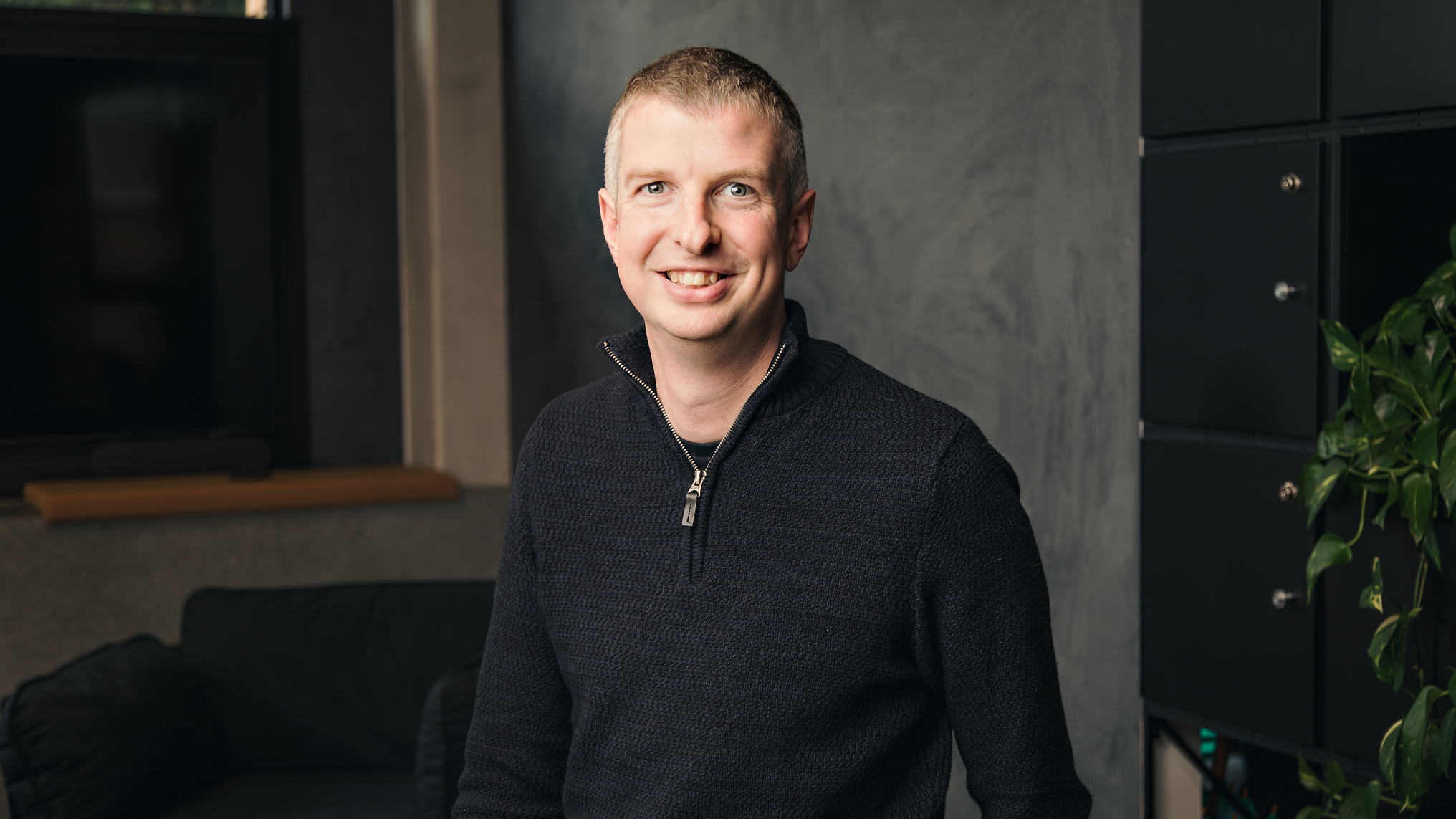
According to Anthony Laing – professor of physics at the University of Bristol, and CEO at Duality Quantum Photonics – the practical reality of current quantum systems is more constrained than vendor roadmaps suggest.
“Today’s quantum computers are exponentially faster at simulating noise, which can be surprisingly interesting,” Laing tells BI Foresight. “But for more commercial and industrially interesting markets, we are still constrained to addressing problem sizes smaller than those that can be tackled with conventional computers.”
The phrase “exponentially faster at simulating noise” is a wry acknowledgement of the challenges that still exist. And according to Robert Sutor, founder at Sutor Group, and former IBM Quantum vice president, the scaling challenge compounds the problem.
“It gets harder to scale quantum computers,” Sutor tells us. “It’s not like you can go and buy a thousand and just put them in the same box. It’s not like RAM in your laptop. And you need about 100,000 physical qubits to even start getting in the game.”
Professor Noah Linden, director of the Bristol Quantum Information Institute, identifies another important and underrepresented area to consider, which he calls the “wall-clock time” problem.
“It’s not enough to say a quantum algorithm scales better. What we should really care about is the wall-clock time. If you have a problem for which the quantum computer running for a year will do better than any digital computer, then that’s probably irrelevant. Even if there was a provable advantage, if the length of time it takes to get that advantage is so long, that’s not helpful.”
Unlike digital computing, where silicon-based fabrication technology has dominated for decades, no single quantum hardware platform has yet established itself as the clear leader. Superconducting qubits, trapped ions, photonics, neutral atoms, and silicon spin qubits are all in active development, each with their own strengths and limitations.
“I think there’s quite a number of years before we have a better picture of that,” says Linden. “Quite a lot of people think there’ll be some sort of hybrid, making use of the good and easy bits of one technology, to deal with the hard bits of another.”
Anthony Laing’s company, Duality Quantum Photonics, develops photonic processors, including quantum and classical processors. But the company also started developing photonic signal processors, which can solve some of today’s important challenges using today’s technology. And Laing is candid about the near-term commercial picture, claiming that, “the big commercial returns will be over the longer term, as the ecosystems develop together with the scale of the quantum computers.”
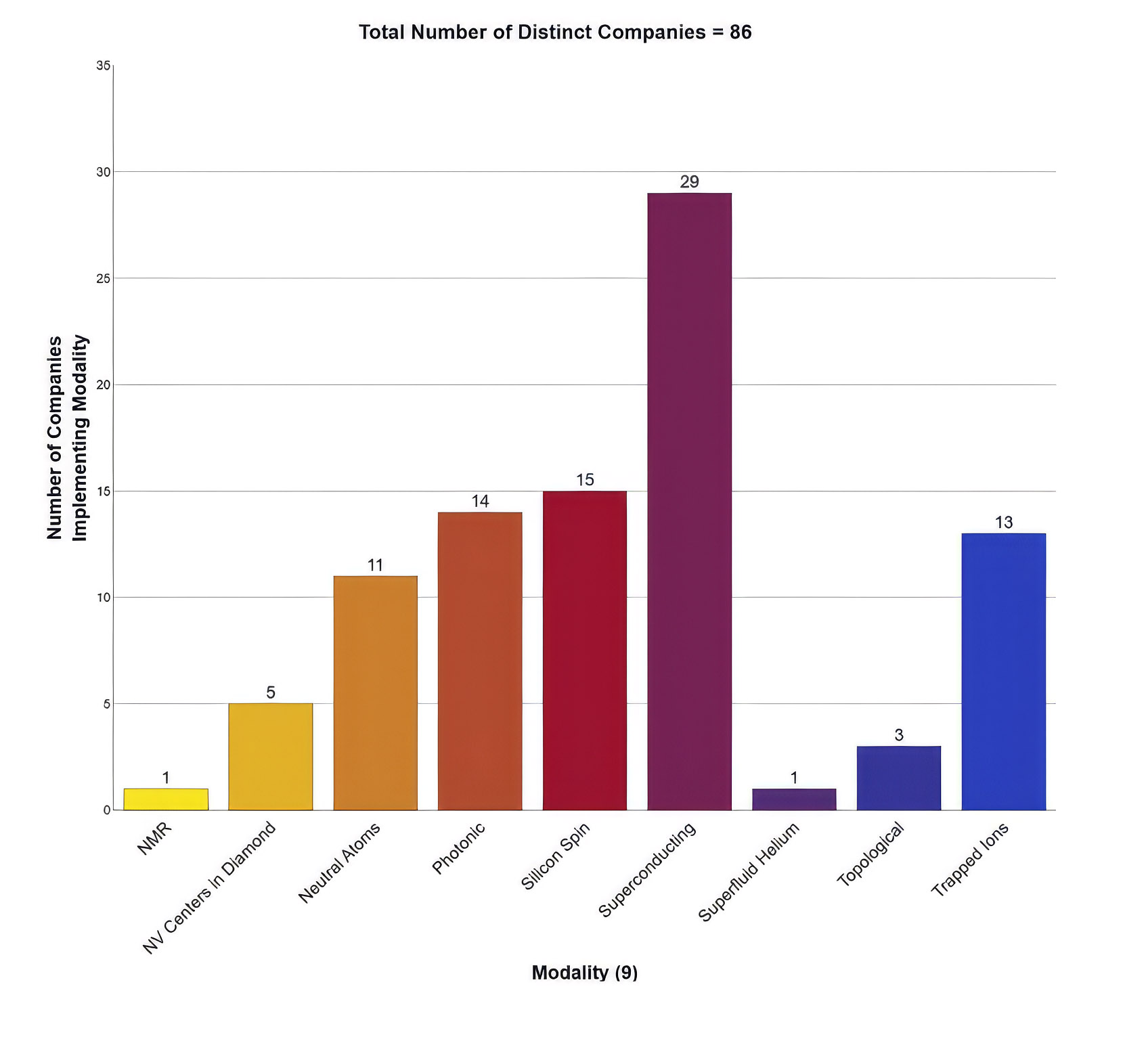
This chart shows the number of companies that construct their qubits using each modality. Some modalities are natural because they use photons, ions, or neutral atoms as qubits, while others, such as Superconducting and Silicon Spin, are manufactured using semiconductor technology.
Source: 2026 Sutor Group Intelligence and Advisory
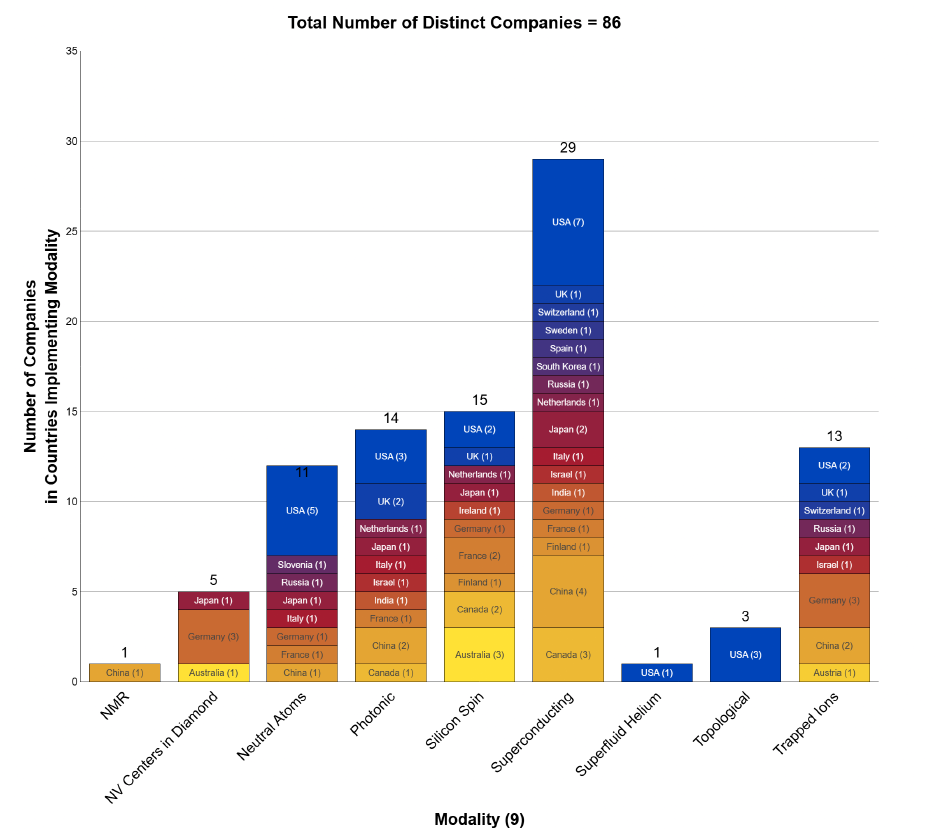
This chart shows the number of companies in each country that implement each modality.
Source: 2026 Sutor Group Intelligence and Advisory
Working at the frontier of quantum technologies? The Bristol Innovations Zone connects businesses with world-leading researchers to turn R&D ambitions into real outcomes. Find out how.
Explore BIZAccording to Jay Gambetta, director of IBM Research, classical computers will need to work in tandem with quantum machines, using software frameworks such as IBM Qiskit, Microsoft Azure Quantum, and Amazon Braket to coordinate workloads.
“The future lies in quantum-centric supercomputing, where quantum processors work together with classical high-performance computing to solve problems that were previously out of reach,” Gambetta explained in an IBM statement at the beginning of 2026.
To help achieve this hybrid model, companies are increasingly turning to AI when tackling challenges such as process optimisation, error mitigation, abstraction, and orchestration. Addressing these areas will be an essential step in moving quantum computing beyond noisy, fragile systems, which aren’t yet commercially viable. And to illustrate how classical computing, such as machine learning and AI, are enabling quantum development, Robert Sutor makes an analogy with noise-cancelling headphones.
“When you wear noise-cancelling headphones, how do they work? Well, in some sense, what happens is they listen to the ambient noise. And then they subtract it, and separate out what’s supposed to be there from noise,” Sutor tells us. “And using AI and machine learning we can identify sources of noise, of inaccuracies. And then once you understand where and why that’s happening, either you can do something directly or you can improve that part of the system.”
The areas where AI is having the biggest impact within quantum computing are calibration and error mitigation, with AI models being used to learn noise patterns, automate calibration, and improve workflows.
Google’s AlphaQubit is a good example of using a transformer-based decoder for error correction. With a major review article on AI for quantum computing, published in Nature, claiming that: “AlphaQubit uses sophisticated noise models for initial training, followed by refinement using experimental data from Google’s Sycamore quantum processor, achieving better performance than current state-of-the-art algorithmic-based decoders.” But it still faces practical speed and deployment constraints before it can be treated as a real-time decoder.
Elsewhere, IBM’s Qiskit Runtime provides production-oriented error mitigation and suppression tools, while IBM’s machine-learning research has enabled rapid calibration, control, and characterisation of quantum hardware.
Chemistry and materials science, which are major elements within drug discovery, are cited by many experts as the most commercially interesting use cases involving quantum-classical hybrid workflows; that is, systems where quantum processors handle specific sub-problems, while classical hardware manages the broader computation. AI surrogate models and pattern recognition are increasingly being used to bridge the two. But there’s a requirement for classical validation.
For most near-term applications, the problems are small enough that classical verification remains feasible. But for the bigger challenges where quantum would provide a genuine advantage, such as large-scale molecular simulation, classical verification becomes far more difficult. And addressing this verification bottleneck is a fundamental challenge when it comes to transforming quantum advantage into practical tools that you can trust.
Developer tooling has improved substantially in recent years, to the point where there’s now a rich ecosystem of software development kits (SDKs) and cloud services available (including Microsoft’s QDK, IBM’s Qiskit, Amazon Braket; Google Quantum AI’s open-source Python software library, Cirq; and cross‑platform libraries such as PennyLane). This software provides higher‑level abstraction layers, so that developers can write quantum algorithms without a deep understanding of physics. But they still fall short of making quantum programming truly plug‑and‑play.
As VP of Emerging Technology, Brian Hopkins leads Forrester’s flagship reports on quantum, providing data-driven insights and frameworks. And he believes that there’s still work to be done in this area.
“Integration is substantial because quantum workloads must plug into existing HPC, data platforms, and workflow pipelines,” Hopkins tells us. “Most firms are not ready; developer tooling still doesn’t sufficiently abstract the physics, and quantum programming remains too specialised for most teams.”
In the world of quantum physics, where particles of matter can behave like waves, exist in multiple states at the same time, and interact instantaneously across the vast expanses of outer space, it’s no surprise that establishing the nature of quantum materials (the physical substrates needed to build better qubits) is a tough nut to crack.
AI, and its subfield of Machine Learning (ML), are helping to accelerate this process, though, with ML being used to make sense of the information obtained from existing compounds, so predictions can be made on the compositions and behaviours of their atomic constituents.
However, fabrication still presents a major blocker. The precision required for qubit manufacture is incredibly expensive, and heavily constrained by specialised physical infrastructure. In the context of the UK’s preparedness, the NQCC’s testbed network helps provide some of this shared infrastructure, but bottlenecks are occurring across global supply chains, and are not localised to any single facility.
The most commonly cited near-term commercial quantum use case is optimisation, whether that’s in portfolio construction, logistics routing, drug candidate screening, or elsewhere.
This is supported by the real-world experience of Hopkins, who says that the companies coming to Forrester for advice on how to make use of quantum technology are focusing on a handful of areas, with optimisation being one. But he warns that any transformative change is still a few years away.
“Most enterprises ask about optimisation, simulation, and cryptography, hoping for breakthroughs in areas like portfolio optimisation or materials discovery,” Hopkins tells us. “But the reality is that measurable gains today come only from narrow hybrid pilots, and primarily on quantum annealers, with broader transformational value still at least five years out.”
| Intersection area | What AI contributes | What quantum contributes | Why industry cares (near term) | Constraints to watch |
|---|---|---|---|---|
| System optimisation & control | Process optimisation, calibration, automation | Highly sensitive physical systems | Lower cost of experimentation; improved system stability | Gains incremental; hardware noise persists |
| Hybrid modelling & simulation | Surrogate models, pattern recognition | Exploration of specific quantum problem spaces | Faster R&D cycles in chemistry & materials | Classical validation still required |
| Workflow & toolchain orchestration | Automation, abstraction, developer tooling | New algorithmic approaches | Reduced skills burden; faster onboarding | Fragmented standards |
| Materials discovery (hardware-focused) | Candidate generation & screening | Physical insight into quantum materials | Shortened discovery cycles | Fabrication & testing bottlenecks |
| Complex optimisation (exploratory) | Heuristics, learning-based solvers | Potential advantage for niche problems | Scenario exploration | Advantage unproven |
| Access & abstraction layers | Interfaces, orchestration | Underlying quantum capability | Easier enterprise experimentation | Risk of overselling usability |
Note about sources: This table reflects BI Foresight’s synthesis of publicly available research, industry commentary and expert insight. It is indicative rather than exhaustive.

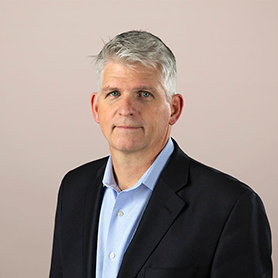
Brian Hopkins
VP of Emerging Technology, Forrester
AI isn’t driving quantum breakthroughs yet. Instead, it’s helping improve algorithms and hybrid workflows; for example, efforts like Google’s Quantum Echoes show how algorithmic innovation can meaningfully accelerate progress. AI‑enhanced hybrid solvers are the most realistic near‑term path to early quantum utility.
The strongest indicator is a credible roadmap toward scalable logical qubits, backed by demonstrated error‑correction progress. Red flags include overreliance on physical qubit counts, weak or nonexistent hybrid‑workflow capabilities, and no clear evidence of falling error rates.
Generally not. Most organisations still use “quantum” as an umbrella term, even though these technology families mature at very different speeds. Quantum computing remains the longest‑horizon area, while sensing and communications technologies often progress more quickly.
Quantum security has been in our “Top 10 Emerging Technologies” for two consecutive years, because of rising urgency. Interest is accelerating as Q‑day draws closer – potentially by 2030 – driving agencies and cloud providers to begin upgrading to quantum‑safe cryptography now.
Talent remains one of the biggest barriers because quantum programming is still too complex without a physics or mathematics background. Tooling is improving, but quantum development is still far from plug‑and‑play.
Quantum is our sole long‑horizon technology: investment is rising again, but meaningful commercial value is still at least five years away. Unlike AI, which is already transforming business processes, quantum remains early‑stage and highly specialised.
Yes. Funding rebounded strongly in 2025 – to more than $5bn – with investors favouring the vendors demonstrating credible progress toward error correction, logical qubits, and hybrid‑utility roadmaps, rather than speculative physics milestones.
The inflection point will be when logical qubits begin outperforming physical qubits and hybrid workflows yield consistent performance.
AlbionVC is a long-established UK VC firm with a growing focus on deep tech, backing start-ups across AI, data infrastructure, and emerging compute alongside healthcare and enterprise software. Its portfolio includes notable wins such as Quantexa, now a UK AI unicorn, as well as investments in synthetic media firm Synthesia and quantum software player Phasecraft.
We’re seeing signs of real value emerging at one end of the stack – specifically in error decoding and hardware calibration. AlphaQubit and Nvidia’s Ising models are concrete examples of AI delivering state-of-the-art results. These problems play to AI’s strengths: there are clear right answers, huge volumes of training data, and fast feedback loops.
At the other end of the stack, simulation and algorithm discovery, AI struggles. Huge search spaces, slow feedback loops, and often no ground truth to verify against. Progress at that end of the stack needs world-class quantum expertise and imagination. The hard part isn’t pattern-matching, it’s formulating the right problem in the first place.
So my view is that AI is a powerful tool for the best teams to compound with, not a substitute for them. The teams who will actually crack quantum are people like Phasecraft, who sit precisely in the algorithms/simulation layer where AI can’t shortcut the work.
Duality Quantum Photonics is a Bristol‑based company developing photonic processors for quantum technologies. It works with UKAEA and Tokamak Energy and has won a £2.5m grant from Innovate UK to build a networked quantum computing testbed called VELOX.
Apart from cracking codes, the exponential impact I’m interested in is related to simulating quantum mechanics in molecular dynamics, chemical reactions, and so on, to model how molecules move, stick together, and come apart. When we can control and engineer these processes at a quantum level, quantum computing will be invaluable in helping to guide and manage those tasks, just like today’s computer modelling of large structures helps guide the construction industry.
The use cases and hardware for quantum computing are being researched and developed toward commercial viability, but it will take time. The photonic signal processing we are developing for today’s data infrastructure is purely classical. But as quantum technologies increase in scale, and find their way into data centres and HPC, they will need quantum photonic signal processing.
Photonics can also perform some of the key AI algorithms much faster than electronic processors. Apart from that, and as is becoming increasingly apparent, AI can speed up certain tasks and is a useful research tool, but right now we still need human skills for inventive chip design.
I always felt that it was a 70-year journey from the conception of quantum computing to large scale fault-tolerant quantum computing [FTQC]. I was thinking about previous similar journeys such as the conception of a Bose Einstein condensate to its experimental realisation, which took about 70 years. If we take Feynman’s 1982 lecture as the conception of QC (some may point at other events) then we are looking at the middle of this century for FTQC. But we are already past the halfway point and the time to FTQC could be shortened by a few technological leaps.
Robert Sutor spent many years at IBM leading quantum computing commercialisation and strategy. He now runs the Sutor Group, advising organisations on quantum technology strategy and readiness.
Quantum for AI, as opposed to AI for quantum, is such an overhyped area. I tend to call it ‘Quantum in the neighbourhood of AI’. Where some sort of quantum calculation might be useful at some point; it could be adjusting some things going into AI. Or it could be adjusting some things coming out of AI. They’re in the neighbourhood, but they’re not an essential requirement.
Regarding AI for quantum, the things we’re currently seeing are very short-term experiments for minor gains. In the long run, if you fast-forward 10, 15, or 20 years, quantum computers will be much larger, will be controlled better, and will be fault tolerant. And when we get to the point where we have hundreds, or thousands, or millions of logical qubits, then we can actually do something interesting, that’s where the fun begins. And that’s the beginning of the golden age of quantum computation. It’s not going to be an overnight thing, despite claims. It’s going to probably take until the turn of the decade for us to start seeing companies beginning to approach this.
In the future, there’s going to be a period in between where we’re transitioning to it. It won’t be a sharp point, but it’ll be this 18 month period, we are still in the ‘before’ period of true quantum computing. And so companies are trying real hard to survive this period, so they can reach that turning point.
And it isn’t just about whether quantum provides improvements, because we need to consider other factors, such as cost. If a slower classical solution costs one-hundredth of what it takes on a quantum computer, then it isn’t viable. Energy usage is also a huge factor. Companies like PsiQuantum suggest their large‑scale photonic systems could require facilities on the scale of data centres. But this is going to require massive cooling. This isn’t a computer you just plug in the wall socket.
Brian Hopkins leads Forrester’s emerging technology research and is the author of the firm’s 2026 State of Quantum Computing report. Forrester’s research is not yet published at time of writing.
Quantum computing has officially moved into our ‘Top 10 Emerging Technologies’ for the year. It has entered what we describe as the ‘fault‑tolerant foundation era’, where progress is measured by logical, error‑corrected qubits instead of physical qubit counts. According to our upcoming State of Quantum Computing research, Q‑day – the point when a quantum computer could break asymmetric encryption – now has roughly a 50/50 chance of occurring by 2030, which elevates its strategic priority.
The biggest misconception is that quantum will accelerate AI anytime soon. In the near term, the flow goes in the opposite direction – AI is assisting quantum. Quantum machine‑learning models are still early‑stage because today’s ML methods depend on iterative parameter updates that require storing intermediate values, something current quantum systems cannot do natively. This means AI/ML must be fundamentally reinvented for quantum execution, and that work is just beginning and requires better quantum hardware than we have today.
Elsewhere, there’s a misunderstanding around treating quantum computers as future replacements for classical machines, rather than specialised solvers for specific problems where classical systems fail or scale poorly. Programming those problems requires deep expertise in physics, optimisation, chemistry, or machine learning, and this will remain true for the foreseeable future.
Professor Noah Linden directs the Bristol Quantum Information Institute, one of the UK’s leading centres for quantum information science, spanning quantum computing, quantum communication, and quantum foundations research.
The right question is not what can a quantum computer do now that a digital computer can’t? Because we believe that quantum computers are most likely to be of a scale to do interesting things in, say 10 or maybe 15 years.
So we’re not fighting a battle between existing technology and future quantum computing. We’re fighting a battle in the quantum computing domain, between quantum computing in 10 or 15 years, and what we will have achieved in AI technology in that time. And it’s unknown. So you don’t need to just think about the future of quantum computing, you need to think about the future of other types of computing as well.
And whilst there’s a lot of focus on AI, it’s just a component of digital computing. Granted, it’s a very high-profile one at the moment. But it’s not the only thing. So the right question is really about classical/digital computing and quantum computing. I think a model that most people have is that a quantum computer is likely to be what you might call a co-processor.
We run a CPD [Continuing Professional Development] course together with the National Quantum Computing Centre. These advanced quantum information and quantum computing courses are focused on training the workforce. Because whilst you might hope that you don’t really have to understand the subject to make good decisions, I think you need people that can make seriously good decisions; you need some people who actually understand it at a more than superficial level.
Right now, the number of people who are trained in quantum computing is not very high. And our goal in these courses is to train people up – this includes technical people, but also potentially people in banking and other industries – so that they start to have the skills to make proper evaluations.
Real quantum progress will depend on resolving existing constraints. The following signals indicate whether the structural challenges identified above are genuinely being addressed.
Watch error rates, coherence times, and actual system uptime across multiple vendors. The signal is not a single vendor-announced breakthrough but consistent improvement across independent platforms. The inflection point Hopkins identifies is logical qubits outperforming physical qubits reliably: a milestone that IBM’s qLDPC roadmap targets, but has not yet demonstrated at scale.
Look out for independent replication of quantum advantage claims on commercially relevant problems. A red flag here is vendor-only announcements. What we want to see is multiple, independent laboratories achieving consistent advantage on the same problem. Google’s end-2025 quantum advantage claim is a starting point. But whether it holds up to independent scrutiny, and whether it translates to a problem anyone outside Google actually cares about, are important points to consider.
Q-day – the point at which a cryptographically-relevant quantum computer could break RSA-2048 – is assessed by Forrester as having roughly a 50/50 probability of arriving by 2030. NIST’s post-quantum cryptography standards, published in 2024, provide the migration path. And for many enterprises, post-quantum cryptography is the quantum-related area that needs addressing today.
A reliable indicator of genuine maturity will be the shift in how vendors talk about their technology. When marketing materials move beyond headlines that scream ‘revolutionary’ and ‘transformative’, to specific, measurable claims, with acknowledged limitations, this will be a sign that quantum technology is moving beyond the hype cycle. At this point enterprises will be taking quantum solutions beyond pilots, and into production.
Industry consolidation will only increase in the coming years, with acquisitions accelerating, funding rounds reducing, and companies quietly winding down. But this will mark a new era of maturity. It will be a sign that the market is now able to distinguish between organisations with real capability, over those that can’t deliver on their initial promise. And in the coming years, as Sutor explains, “Some companies will fade away.” The survivors will be those with demonstrated progress on error correction, delivering credible hybrid-workflow capabilities, and falling error rates.
Quantum computing will eventually be transformative. But the journey should be measured in decades, not years. AI has already provided essential, operational scaffolding. And whilst this may not be the breakthrough catalyst that some had hoped for, and in many cases claimed, it has become a genuine enabler of progress within quantum technologies. Sutor calls this “Optimism with realism,” which is reflected in all the interviews we conducted during this report.
The Bristol Innovations Zone (BIZ) is a gateway for collaboration between industry and the University of Bristol – giving businesses structured access to deep-tech research, specialist facilities and emerging talent. Whether you’re scaling an existing programme or exploring new directions, BIZ is built for partnerships like yours.